
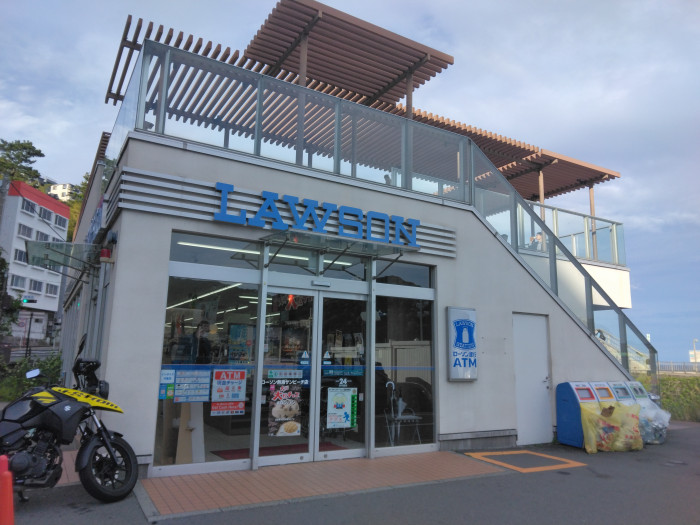
なかなか予定が合わず、およそ半年近くが過ぎてしまったが、琴ヶ浜で知り合った方とようやく共に潜れる機会ができた。車での送迎もしていただけるとのことで、普段、川奈で潜る時のように、駅までの急坂を重たい荷物をゴロゴロ引き摺って、まだ潜る前であるのに汗だくになる苦労もない。これはありがたい。近所のコンビニを、待ち合わせ場所に指定してくれた。
My schedule hadn't cooperated with the person I met at Kotogahama, and almost six months passed, but I finally had the opportunity to dive with him. The shop offers a car pick-up and drop-off service, so I didn't have to go through the usual struggle of dragging my heavy luggage up the steep hill to the station and getting drenched in sweat even before I start diving, like I usually do when
diving in Kawana. This was very helpful for me. They designated my nearby
convenience store as our meeting place.
目的地の大瀬崎までは、熱海から約1時間半くらい掛かる。お互いほぼ初対面なので、道中、自己紹介的な会話が弾んだ。
The destination, Osezaki, is about an hour and a half away from Atami by car.
Since we were practically meeting for the first time, we had a pleasant
conversation along the way, incorporating elements of self-introductions.
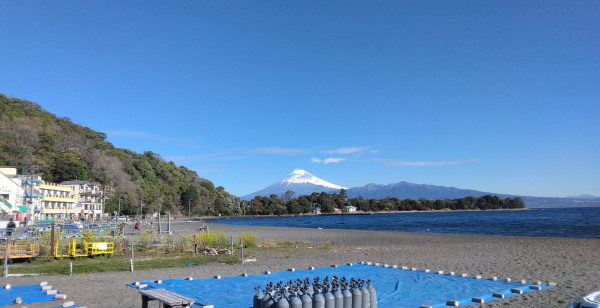
内湾ではホウボウや巨大なカエルアンコウなどに出会えたが、残念ながらカメラに不具合が発生しており、動画は映っていなかった。そのため、陸から眺めた内湾の風景しか撮影できていない。ただ、浜辺からの富士山は思いの外間近で、爽快であった。
In the inner bay, we encountered a Red gurnard and Striated Frogfish. But
unfortunately, my camera malfunctioned. So, no video was recorded. Therefore, I only managed to photograph the scenery of the inner bay from land. However, Mt. Fuji was surprisingly close from the beach. It was exhilarating for me.
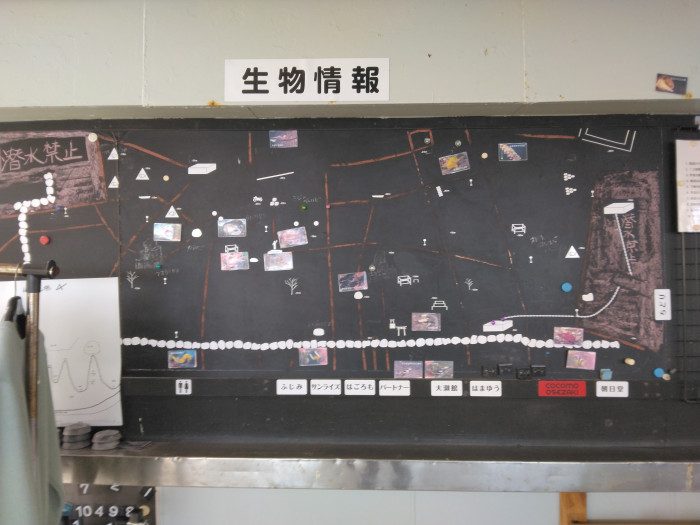
ショップの広い休憩室には、今日、内湾で出会える可能性のある生物のマップが作成されている。これを見ながら、インストラクターの方々はショップ・スタッフさんと話し込んでいた。
In a spacious break room of the shop, a map was created showing the types of creatures that we might find in the inner bay today. While looking at this, our instructors were deep in conversation with the shop staff.
大瀬崎の岬の先端のスポットへは、重たい装備品を台車に載せて自ら運ばねばならない。これが、なかなかの距離である。
To get to the spot at the tip of Osezaki Cape, we have to carry our heavy equipment for scuba diving on a cart by ourselves. In fact, it was quite a
distance.
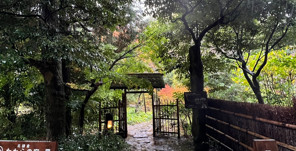
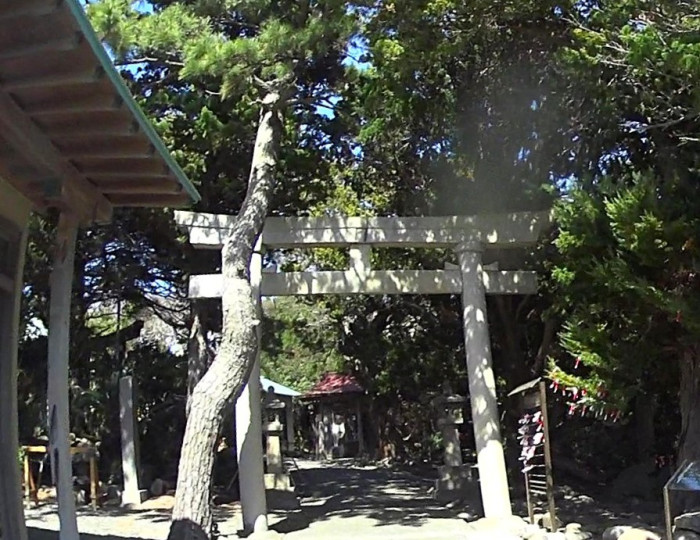
不思議なことに、道中に立派な鳥居が立っており、それを潜ると神社の敷地内に入ることになる。
Strangely enough, a magnificent torii gate stood along the path. Passing through it meant we entered the sacred grounds of a shrine.
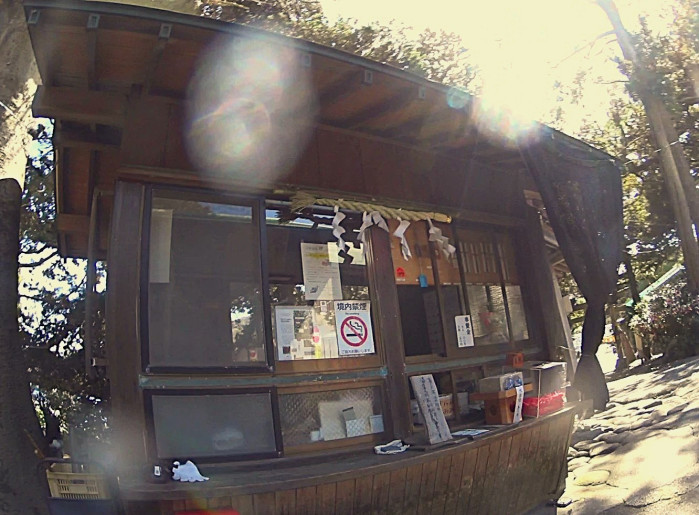
そのため、社務所にて100円の通行料を払わねばならない。As we have entered the sacred area, we have to pay a 100 yen toll at the shrine office.
この岬、大瀬崎が出来た経緯は伝説になっている。
The situation of how this cape, Osezaki, came to be is a legend.island appeared. As its shape resembled "biwa" (a traditional Japanese lute), it was called "Biwa Island" at the time. Around the same period, another massive earthquake occurred in Tosa Province in Shikoku, and caused land to be
submerged under the sea at the area. The belief that these were related, and
that a god had brought the land of Tosa to this location, is the origin of the
legend. As he possessed superhuman strength capable of pulling land , the god was named Hikitechikara-no-Mikoto, and the shrine was established here.
その歴史的な価値や漁村としての魅力から、国や県から様々な指定文化財に認定されている。
Due to its historical value and charm as a fishing village, it has been designated as various cultural property by the national and prefectural governments.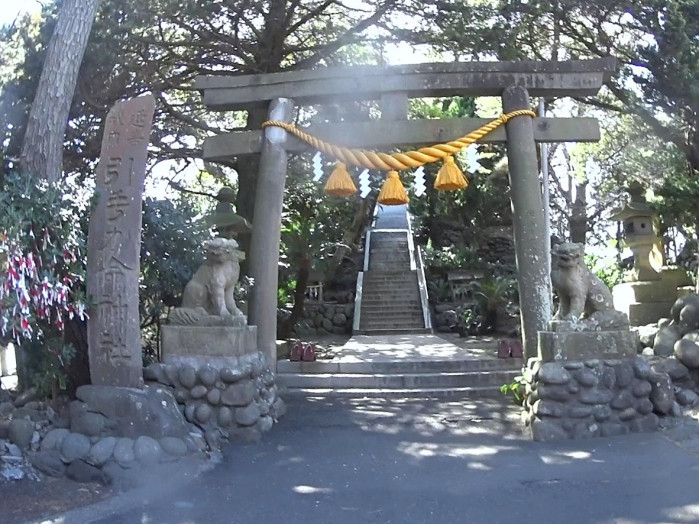
砂場の内湾とは異なり、大きな石がゴロゴロしている岩場なので、足場が悪い。さらには波もある中、海に入ってフィンを履くまでと、フィンを脱いで陸に上がるまでには誰もが手間取った。
Unlike the inner bay of the sandy area, here was rocky with large boulders
Unlike the inner bay of the sandy area, here was rocky with large boulders
scattered around. Therefore, our footing became unstable. Furthermore,
because of the waves, everyone had trouble getting into the water and putting
on their fins at the time of entry, and then taking them off and getting back onto
land at the time of exit.