カブトクラゲMikado Jellyfish
クシクラゲの一種で、日本沿岸の、特に夏から秋によく観察できる。東伊豆でも見かけることがある。縦に筋状に並んでいる8列の部分は”櫛板”と呼ばれ、数万本の繊毛が束ねられている。これを巧みに動かして移動するのだが、この繊毛が光に当たると虹色に見える。あまりの美しさに、いつもじっと見入ってしまう。
This jellyfish is a type of comb jellyfish. We can often observe it along the coast of Japan, especially from summer to autumn. I could also see it in the sea of
Higashi Izu. The sections of the eight vertically arranged rows are called
"comb plates," and tens of thousands of cilia are bundled on it. They swim by
skillfully moving these cilia. When these cilia are exposed to light, they look
rainbow-colored.
名前は、袖状突起を広げた様子が侍の兜に形が似ていることに由来する。海中での優雅さから、「ニンフのような外観(Bolinopsis)」との属名を持つ。
The name comes from the fact that its shape of the sleeve-like protrusion
whidch are spread out resembles a samurai's helmet. It has a genus name,
"nymph-like appearance (Bolinopsis)" by its elegance in the sea.
粘液を使って餌のプランクトンを絡め捕る。毒はないので、近づいても安心である。
It uses mucus to capture plankton as food. As it doesn't have poison, it is safe
to approach them.
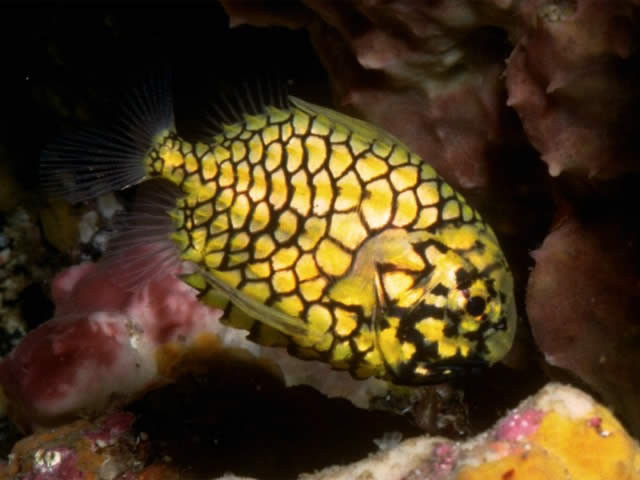
マツカサウオ
Pinecone Fish生息域は南日本、インド洋、西オーストラリアである。稀だが、東伊豆の川奈でも見掛ける。
Its habitat is southern Japan, the Indian Ocean, and Western Australia. We could also see them in Kawana of East Izu although it was rare.
”マツカサ”との名の通り模様が似ており、鱗も”松ぼっくり”のように逆立っている。体が硬いので、遊泳力が弱いのが可愛らしい。。海外では鎧を纏っているように見えるようで”Knight Fish”や”Armor Fish”、またはパイナップルに似ていると思う人もおり、”Pineapple Fish”とも呼称されている。
As its name, "Matsukasa" suggests, its scales stand on end like a pine cone. It is very cute that they are not good at swimming in spite of fish because the
body is so stiff. Overseas, it is called "Knight Fish" or "Armor Fish" because it
looks like it's wearing armor, or "Pineapple Fish" because some people think it
resembles a pineapple.
顎の辺りに発光バクテリアを生息させているが、発光する理由は解明されておらず、仲間とのコミュニケーション、あるいはチョウチンアンコウのような疑似餌の役割か、と憶測されている。
It is speculated that this is a way to communicate with fellow fish, or that it acts as a lure, like the anglerfish.動画では暗くて色合いが解らないが、実際は下の写真のように鮮やかである。
I think that the view is too dark in my movie and it is difficult for you to recognize the colors. But in reality, it is as vivid as the picture below.
エポーレットシャークEpaulette Shark
”エポーレット(epaulet)”とは、軍服などの肩章を意味する。名は”サメ”だが獰猛ではなく、泳ぎも不得意である。
"Epaulet" means the shoulder straps on military uniforms and so on. Despite
that "Shark" is contained in its name, it is not ferocious and is not good at
swimming.
生息域は、オーストラリアやニューギニアのサンゴ礁や潮だまりである。
Its habitat is the coral reefs and tide pools in Australia and New Guinea.海水がなくとも1時間程度であれば生息でき、浅い潮だまりを移動することがあるらしい。その際には胸鰭や腹びれを巧みに使い、這うように”歩く”ことができることから、「ウォーキング・シャーク」との異名も持っている。
It can survive for about an hour without seawater, and sometimes moves among the shallow tide pools. When doing so, it skillfully uses its pectoral and
pelvic fins, and can "walk" like crawling. Therefore. It has another nickname,
"walking shark."
館内のエポーレットシャークは体長20㎝程度であったが、成長すると1mにもなるそうである。
The epaulette shark at the museum was only about 20 cm long, but it is said to grow to be up to 1 meter long.
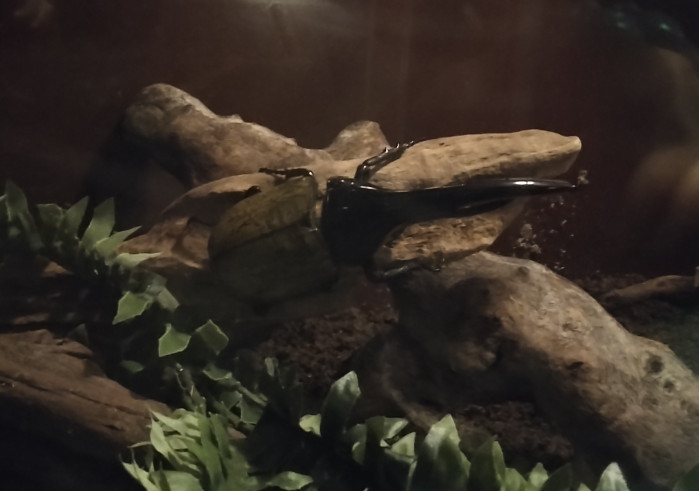
ヘラクレスオオカブトHercules Beetle
子供の頃に昆虫図鑑を見ては、「飼ってみたい!」と憧れた人も多いのではなかろうか。”カッコイイ”という言葉は、このカブトムシを形容するにこそ相応しい気がする。名の”Hercules”は、当然、ギリシア神話最大の英雄ヘラクレスに由来する。
When it was still in childhood, almost children would hope to raise it as a pet
once with looking at an insect encyclopedia. The word "cool" seems especially appropriate to describe this beetle、I think. Of course, the name, "Hercules",
comes from, the greatest hero in Greek mythology, " Hercules ".
メキシコ南部から南アメリカ大陸中部の熱帯雨林の、特に湿度の高い雲霧林に生息している。雨季を好むため、8月や12月の雨上がりに活発に活動する。
It lives in the tropical rainforests of southern Mexico and central South America, the especially humid cloud forests. As it prefers the rainy season, it is most
active after the rains in August and December.
黄色い上翅が特徴的だが、常に黄色いわけではなく、雨などで濡れると真っ黒に変色する。体色も、天候によって変えることができる。
Though its yellow forewings are distinctive, they are not always yellow. They turn pitch black when wet. It can also change the body color depending on the weather.
クモウツボSnowflake Moray
”海のギャング”扱いをされるウツボにしては、口が丸く、可愛らしい。外見通り、性格は温和である。
In spite of a moray eel which is often treated as the "gangster of the sea," it has a round mouth. So, I felt cute. It also has a gentle personality as its appearance.生息域は広く、北米から中米と、インド洋側のアフリカ沿岸の亜熱帯と熱帯域である。日本でも、徳之島の波の静かなサンゴ辺りで観察できる。
Its habitat is wide, stretching from North America to Central America, and the subtropical and tropical regions of the African coast on the Indian Ocean side.
In Japan, it can be observed around the calm coral areas in Tokunoshima.
館内のクモウツボはまだ赤ん坊なので黒い斑点が大きいが、成熟すると黄色い部分の方が多くなる。模様に対する印象の違いであろう。和名は「雲」を冠しているが、英名では”Starry(星空)”や”Snowflake(舞う雪)”が使用されている。
Snowflake Moray in the museum was still a baby, so it has large black spots. But if it matured, the yellow areas increase. It would be probably due to the
difference in the impression given by the pattern according to human race. Its
Japanese name includes the character "cloud," but in its English names "Starry" and "Snowflake" are used.